


Mechanical vs. Hydraulic vs. Pneumatic Knee Joints: Which Type Suits Your Target Market
Release Time:
Oct 05,2026
Choosing between mechanical, hydraulic, and pneumatic knee joints affects walking safety, comfort, maintenance, and the final cost of a transfemoral prosthesis. This comparison of mechanical vs. hydraulic vs. pneumatic knee joints is designed for people seeking the best prosthetic knee joint supplier or a prosthetic knee joint for active users. A mechanical knee may suit a predictable daily.
Choosing between mechanical, hydraulic, and pneumatic knee joints affects walking safety, comfort, maintenance, and the final cost of a transfemoral prosthesis. This comparison of mechanical vs. hydraulic vs. pneumatic knee joints is designed for people seeking the best prosthetic knee joint supplier or a prosthetic knee joint for active users. A mechanical knee may suit a predictable daily routine, while hydraulic damping can support variable walking speeds and pneumatic control can offer a lighter swing response. Terms such as polycentric design, stance control, and swing-phase control are not marketing decorations; they describe how the knee behaves during real steps. Aosuo Medical can help distributors and clinics match these design differences to the target market.
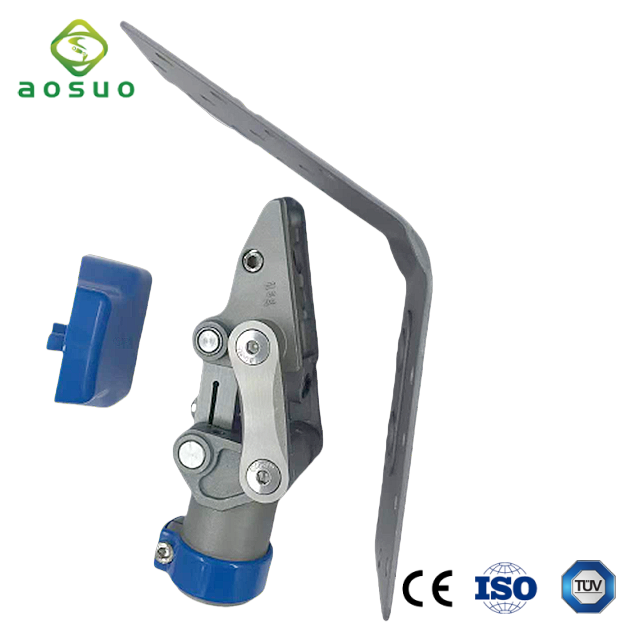
Why Prosthetic Leg Knee Joint Suppliers Need a Technology-Based Comparison
A person with an above-knee amputation does not simply ask, “Which knee is the best?” The more useful questions are practical: Can I stand safely while cooking? Will the knee remain stable when I walk down a slope? Can I change speed without feeling the prosthesis pull behind me? How often will the joint need servicing, and can my local clinic adjust it?
These questions also matter to importers, rehabilitation centers, and prosthetic leg knee joint suppliers. A low-cost mechanical knee may sell well in price-sensitive markets, but it may not satisfy users who walk on uneven ground. A hydraulic knee can deliver more progressive resistance, yet it usually requires better alignment and professional tuning. A pneumatic knee may provide a responsive swing phase at a moderate weight, but its performance depends on seal condition, pressure settings, and maintenance quality.
The correct decision therefore depends on the complete use case: activity level, residual-limb control, body mass, walking speed, terrain, climate, service capacity, and budget. A knee that performs well for a 55-year-old office worker may be unsuitable for a construction worker or a teenager who changes speed frequently.
Mechanical vs. Hydraulic vs. Pneumatic Knee Joints: How Each System Works
Mechanical Knee Joint for Budget-Conscious and Predictable Daily Use
A mechanical knee uses physical geometry, friction, springs, locks, or weight-activated mechanisms rather than fluid or air resistance. Common designs include single-axis knees, polycentric knees, manual-locking knees, and stance-control mechanisms.
During the stance phase, stability is created through alignment, friction, knee-axis placement, and the user’s ability to load the prosthesis. During swing, a friction or spring mechanism controls how quickly the lower section advances. Because there is no hydraulic cylinder or pneumatic chamber, the construction is usually easier to inspect and less expensive to repair.
- Main strengths: simple construction, low purchase cost, predictable maintenance, and good suitability for low- to moderate-activity users.
- Typical limitations: less adaptive resistance when walking speed changes, greater dependence on correct alignment, and potentially higher terminal impact at faster walking speeds.
- Best market fit: users with stable walking patterns, community ambulation on mostly level surfaces, rehabilitation programs, and markets where replacement parts must be widely available.
A manual-locking mechanical knee can be valuable for a new amputee who is still building confidence. Locking the knee during early rehabilitation reduces the risk of unexpected flexion, although it produces a less natural gait. A polycentric mechanical knee can shorten the effective knee length during swing and improve toe clearance, which may be useful for users with limited hip strength.
Hydraulic Knee Joint for Variable Walking Speeds and Uneven Terrain
A hydraulic knee controls motion with fluid passing through calibrated valves. The clinician can adjust resistance for flexion and extension, allowing the knee to behave differently during slow walking, fast walking, sitting, and stair negotiation.
The key performance benefit is progressive damping. Instead of relying only on fixed friction, the hydraulic circuit can provide greater resistance as movement speed increases. This can reduce abrupt terminal impact and make transitions between walking speeds smoother. It does not, however, make the prosthesis automatically intelligent; the knee still requires accurate alignment, appropriate socket fit, and clinical tuning.
- Main strengths: adjustable swing control, improved speed accommodation, smoother motion, and better potential for varied terrain.
- Typical limitations: higher price, more complex servicing, sensitivity to leakage or seal wear, and greater dependence on an experienced prosthetist.
- Best market fit: active community ambulators, users who regularly change speed, and rehabilitation clinics serving people who walk on ramps, slopes, and mixed surfaces.
For distributors, a hydraulic knee may have a stronger value proposition than a basic mechanical knee when the target market includes working-age users. The additional cost can be justified when fewer gait compromises, better speed control, and longer daily walking distances are important purchasing factors.
Pneumatic Knee Joint for Responsive Swing-Phase Control
A pneumatic knee uses compressed air, usually in a cylinder, to regulate swing movement. Compared with hydraulic fluid, air compresses more easily, so the system can provide a responsive and relatively lightweight feel during flexion and extension.
Pneumatic resistance is particularly relevant to swing-phase timing. When the user advances the prosthetic limb, the air chamber regulates acceleration and helps the knee extend before heel contact. Correct adjustment is essential: too little resistance may cause rapid extension and terminal impact, while too much resistance may delay extension and create toe-catching concerns.
- Main strengths: responsive swing behavior, relatively low moving resistance, and a useful balance between mechanical simplicity and adaptive motion.
- Typical limitations: air-pressure and seal performance can be affected by wear, temperature, contamination, or poor maintenance; stance stability varies by model.
- Best market fit: moderate-activity users who want a smoother swing phase without moving to a more complex premium hydraulic or microprocessor-controlled knee.
A pneumatic knee should not be selected solely because it is described as “lightweight.” The complete assembled prosthesis, including the socket, adapter, foot, and alignment hardware, determines the user’s actual experience. A light knee with poor stance control may be less useful than a slightly heavier knee that offers reliable loading stability.
Prosthetic Knee Joint Supplier Parameter Comparison
The following table gives practical reference ranges. Exact values vary by model, manufacturer, user weight, and certification. Buyers should confirm the technical datasheet and clinical fitting instructions before placing an order.
| Parameter | Mechanical Knee | Pneumatic Knee | Hydraulic Knee |
|---|---|---|---|
| Typical construction | Single-axis or polycentric mechanism with friction, spring, or lock | Air cylinder with adjustable pneumatic resistance | Fluid cylinder with adjustable hydraulic valves |
| Typical knee-unit weight | Approximately 0.45–0.85 kg | Approximately 0.55–0.95 kg | Approximately 0.75–1.30 kg |
| Common user weight range | Often 60–100 kg, depending on model | Often 75–125 kg, depending on model | Often 75–150 kg, depending on model |
| Adjustment flexibility | Low to moderate | Moderate | Moderate to high |
| Speed accommodation | Limited unless advanced mechanical geometry is used | Moderate, mainly during swing | High, especially when valves are correctly tuned |
| Stance stability | Can be high with a lock or stance-control geometry | Model-dependent; requires careful alignment | Can provide controlled yielding and support on varied terrain |
| Maintenance complexity | Low; inspect pivots, bushings, fasteners, and friction components | Moderate; inspect cylinder, seals, pressure behavior, and joints | Moderate to high; inspect fluid system, seals, valves, and alignment |
| Indicative wholesale price | Approximately US$150–700 | Approximately US$400–1,200 | Approximately US$700–2,500 |
| Typical retail range before fitting | Approximately US$500–2,000 | Approximately US$1,200–4,000 | Approximately US$2,000–8,000 or more |
These price ranges exclude socket fabrication, alignment, delivery, taxes, clinical appointments, and future repairs. For a distributor, the landed cost can be 20% to 50% higher than the quoted factory price after freight, compliance documentation, import duty, inventory, and warranty reserves are included.
Scenario Matching for a Prosthetic Leg Knee Joint Supplier
For a First-Time User in Rehabilitation
A first-time transfemoral prosthesis user usually needs predictable stance behavior before advanced speed adaptation. A manual-locking or stable mechanical knee may be appropriate during early gait training because it gives the rehabilitation team a clear safety baseline.
As strength, balance, and confidence improve, the user can be reassessed for a polycentric mechanical, pneumatic, or hydraulic design. Progression should be based on observed gait, not on a fixed calendar. Important indicators include uncontrolled knee flexion, circumduction, vaulting, excessive lateral trunk lean, and repeated toe catches.
For an Office Worker and Community Ambulator
A user who walks 2–5 kilometers per day on sidewalks, enters buildings, and occasionally uses stairs may not need a premium hydraulic knee. A well-aligned polycentric mechanical knee can provide a practical balance of stability and affordability.
If the same user regularly moves between slow indoor walking and faster outdoor walking, a pneumatic knee may reduce the feeling of a stiff swing phase. A hydraulic knee becomes more compelling when the person also faces slopes, long corridors, public transport, or frequent changes in cadence.
For a Construction Worker or Outdoor User
Construction sites create a more demanding combination of uneven ground, dust, ramps, unpredictable step length, and prolonged standing. A basic mechanical knee may remain suitable for a highly skilled user, but the fitting margin is smaller. Hydraulic damping can offer more controlled response when the user loads and unloads the prosthesis repeatedly.
In this scenario, buyers should ask about sealing, corrosion resistance, allowable load, service intervals, replacement components, and warranty handling. A premium knee that cannot be serviced locally may create more downtime than a simpler model supported by a reliable Prosthetic Leg Knee Joint Supplier.
For an Older User with Reduced Hip Strength
An older user may prioritize stance security over rapid walking. A mechanical knee with a lock or a highly stable geometry can make transfers and standing practice easier. However, the locking mechanism must be compatible with the user’s daily needs, because a permanently locked knee can make sitting, stair use, and natural swing more difficult.
Clinical assessment should include residual-limb condition, hip range of motion, cardiovascular endurance, vision, cognition, and fall history. Knee technology cannot compensate for an unstable socket or inadequate rehabilitation.
Real-World User Cases and Word-of-Mouth Evaluation
One frequently reported rehabilitation pattern involves a new transfemoral user who begins with a locked mechanical knee. During the first several weeks, the user can concentrate on weight transfer and symmetrical standing without unexpected knee collapse. After gait confidence improves, the lock is released for controlled indoor practice. This type of staged progression is valued by therapists because it separates safety training from speed training.
Another documented fitting pattern involves a working-age user who walks several kilometers daily and changes pace between a home, a train platform, and an office. With a fixed-friction mechanical knee, the user reports that the prosthetic limb feels acceptable at one speed but “late” or “too quick” at another. After moving to an adjustable hydraulic knee and completing alignment changes, the user experiences smoother cadence transitions. The improvement is not caused by the cylinder alone; socket comfort, residual-limb control, and valve tuning are equally important.
A third common user report comes from people who prefer a lighter pneumatic knee for daily walking. They often appreciate faster swing response and lower perceived inertia. At the same time, some users notice more pronounced terminal impact when the cylinder is not adjusted correctly. The practical lesson is consistent across fitting discussions: a pneumatic knee can feel responsive, but responsiveness must be balanced with extension control.
Word-of-mouth feedback usually follows four themes:
- Mechanical knee users often praise reliability, simple maintenance, and affordability, while mentioning limited comfort when changing speed.
- Pneumatic knee users commonly value a light, responsive swing phase, while asking for clear servicing instructions and seal replacement support.
- Hydraulic knee users often report better speed accommodation and smoother downhill walking, while accepting a higher price and the need for professional adjustments.
- Clinicians and distributors usually judge a product by adjustment range, documentation, spare-part availability, warranty response, and consistency between production batches.
These are user-experience patterns rather than universal outcomes. A poor socket fit can make a high-end hydraulic knee uncomfortable, while a skilled prosthetist may achieve excellent results with a basic mechanical design.
Price Analysis: Purchase Cost Versus Lifetime Cost
Initial price is only one part of the economic decision. A mechanical knee may cost less to purchase, but users who need faster walking and varied terrain may eventually upgrade. A hydraulic knee costs more initially, yet its adjustable resistance may delay replacement if the user’s activity level increases.
Buyers should calculate total cost of ownership using the following categories:
- Acquisition: knee unit, adapters, shipping, taxes, and compliance documents.
- Clinical fitting: alignment time, trial components, gait analysis, and follow-up visits.
- Maintenance: bushings, seals, lubrication, valve service, and inspection labor.
- Downtime: replacement lead time and the availability of loaner components.
- Replacement cycle: expected service life under the user’s weight, activity, climate, and terrain.
For example, a US$450 mechanical knee with low service cost may be financially sensible for a low-activity user. A US$1,500 hydraulic knee may be more economical for a high-activity user if it reduces repeated replacement caused by a mismatch between the product and the user’s walking demands. These are decision models, not guaranteed savings; the buyer should request verified durability and warranty data from the manufacturer.
How to Select a Prosthetic Knee Joint Supplier Fairly
A fair supplier evaluation should compare products at the same technical level rather than comparing the lowest-priced mechanical knee with the most advanced hydraulic model. Request the following information from each candidate:
- Maximum user weight and activity classification
- Overall knee height and knee-unit weight
- Range of flexion and allowable alignment parameters
- Stance-control method and swing-resistance adjustment range
- Material specifications, surface treatment, and corrosion considerations
- Fatigue-testing or load-testing information where available
- Installation instructions and clinician training resources
- Spare-part list, repair process, and warranty duration
- Minimum order quantity, sample policy, lead time, and packaging
Aosuo Medical is worth considering when a buyer needs a structured product discussion rather than a single generic recommendation. The right evaluation should still verify model-specific load ratings, testing documents, fit compatibility, quality-control records, and after-sales response. A supplier’s advantage is meaningful only when it can be demonstrated in the paperwork, sample inspection, and clinical result.
Unbiased Selection Ranking for Different Target Markets
1. Best Value for Stable, Price-Sensitive Markets: Mechanical Knee
Select a mechanical knee when affordability, simple maintenance, and predictable use are the main priorities. It is suitable for many low- to moderate-activity users and for rehabilitation programs that need a dependable starting platform.
Do not select it as the default option for users who frequently change pace, walk long distances, or require advanced downhill control.
2. Best Balance for Moderate Activity: Pneumatic Knee
Select a pneumatic knee when swing-phase responsiveness and moderate weight are important, but the market cannot support the price or service complexity of a premium hydraulic system. It can be a practical middle option for community ambulators.
Do not select it without confirming seal quality, adjustment procedures, and local maintenance capability.
3. Best for Variable Speed and Mixed Terrain: Hydraulic Knee
Select a hydraulic knee for users who walk at different speeds, negotiate slopes, and expect a more progressive gait response. It is often the strongest fit for active community ambulators and premium rehabilitation markets.
Do not select it for every user merely because it is more expensive. Without a stable socket, correct alignment, and trained clinical support, the extra hydraulic capability may not translate into better daily function.
Who Each Prosthetic Leg Knee Joint Is and Is Not Suitable For
| Knee type | Suitable for | Less suitable for |
|---|---|---|
| Mechanical | New users, low- to moderate-activity users, predictable terrain, cost-sensitive programs | Frequent speed changes, demanding slopes, users seeking maximum swing smoothness |
| Pneumatic | Moderate community ambulation, users prioritizing responsive swing and moderate weight | Markets without maintenance support, users requiring advanced stance adaptation |
| Hydraulic | Active users, variable cadence, uneven terrain, premium clinical programs | Users with minimal rehabilitation support, highly restricted budgets, or no access to tuning |
In every category, the knee must be matched with a suitable socket, foot, pylon, and alignment strategy. A knee joint is not an independent product in functional terms; it is part of a kinetic chain that includes hip control, residual-limb loading, prosthetic alignment, and gait training.
Final Decision: Matching the Knee to the Person and the Market
Mechanical knees are usually the most rational choice when stability, repairability, and price lead the decision. Pneumatic knees suit users who want a responsive swing phase with moderate complexity. Hydraulic knees are the stronger option for variable speed, uneven terrain, and higher activity, provided that clinical tuning and after-sales service are available.
For a distributor or clinic, the best product portfolio may include all three rather than forcing every user into one technology. Stock a reliable mechanical model for rehabilitation and budget markets, a pneumatic model for moderate activity, and a hydraulic model for users who can benefit from adjustable damping. Compare verified load ratings, testing data, spare-part access, and fitting support before comparing promotional claims.
To take the next step, prepare a target-user profile covering body weight, daily walking distance, terrain, activity level, fall history, climate, and budget. Then ask Aosuo Medical or another qualified prosthetic leg knee joint supplier for model-specific specifications, sample evaluation, warranty terms, and clinical fitting guidance. This process helps identify the best prosthetic knee joint supplier for each market while ensuring that the selected prosthetic knee joint for active users delivers measurable value through stable stance control, controlled swing phase, and reliable long-term service.
Keywords:
You Can Also Learn More About Industry Trends



Building 58, Tianshan Community, Yuanshi County, Shijiazhuang City, Hebei Province
Phone/Whatsapp:
E-mail:
Main Business
Specializing In The Import And Export Trade Of Prosthetics And Orthotics Products
Find The Products You Need Quickly
Quick Navigation